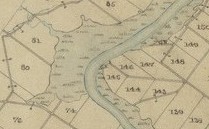
A La Folly is situated within the traditional lands of the Ngarrindjeri nation. It overlooks Moopthalwangk (Mobilong) which was once a haven for birds. Pomberuk has evidence of settlement for at least 6000 years.
Following colonisation, the land was surveyed and the 171-acre section 81 in the Hundred of the Murray was offered for sale. It was passed over at public auction in 1854. Another auction, advertised on the same day, began with…
Gunfire!
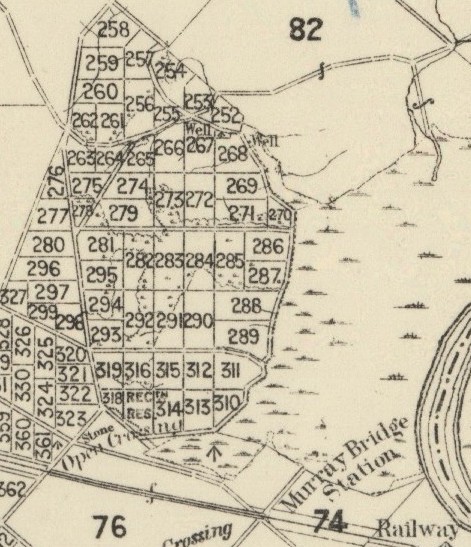
The first (known) colonial settler to take up the land, was notable pastoralist and philanthropist Friedrich Wilhelm Jaensch. Section 81 had been subdivided into smaller holdings and ‘Old Bill’ as he became known, took up a selection including section 286 in 1886.
In 1907 the government would acquire this land as part of Closer Settlement and would offer smaller ‘residential’ sections to settlers who had leased a block of the newly-reclaimed Mobilong swamp.
For the next eighty years section 606 would be one of the many dairies operating in the Murraylands.
The early years of farming and grazing on the blocks were difficult and the ‘blockers’ fought hard for better conditions. The first occupant of section 606, Richard Aldersey Manning, would become a trustee of the newly-formed Murray Bridge Irrigation Board.
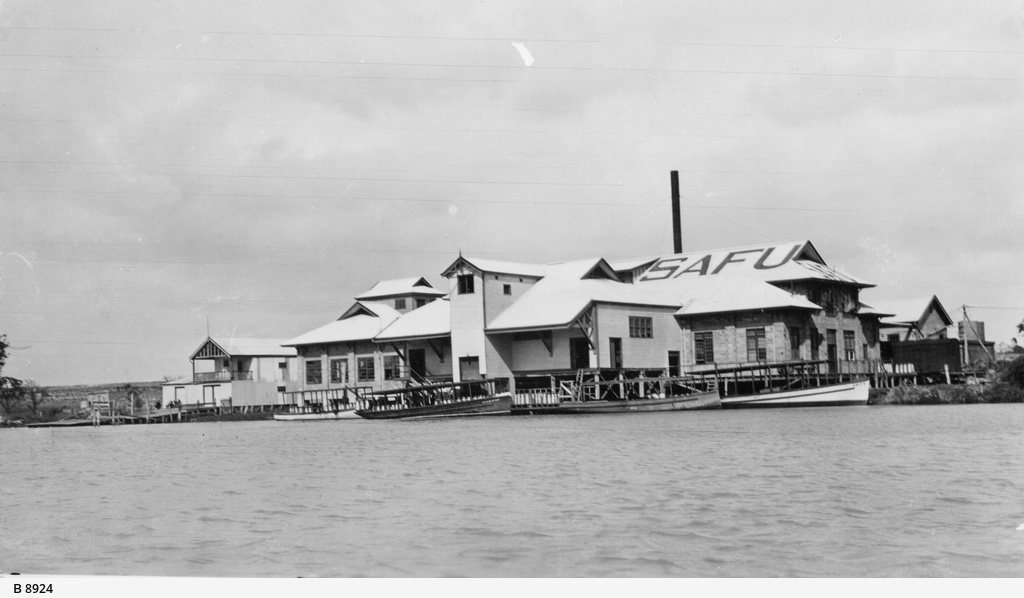
In 1922 South Australian Farmers Union opened a factory in Murray Bridge. Amscol would open one too. The Farmer’s Union fleet of four boats travelled up and down the river collecting milk and passengers.
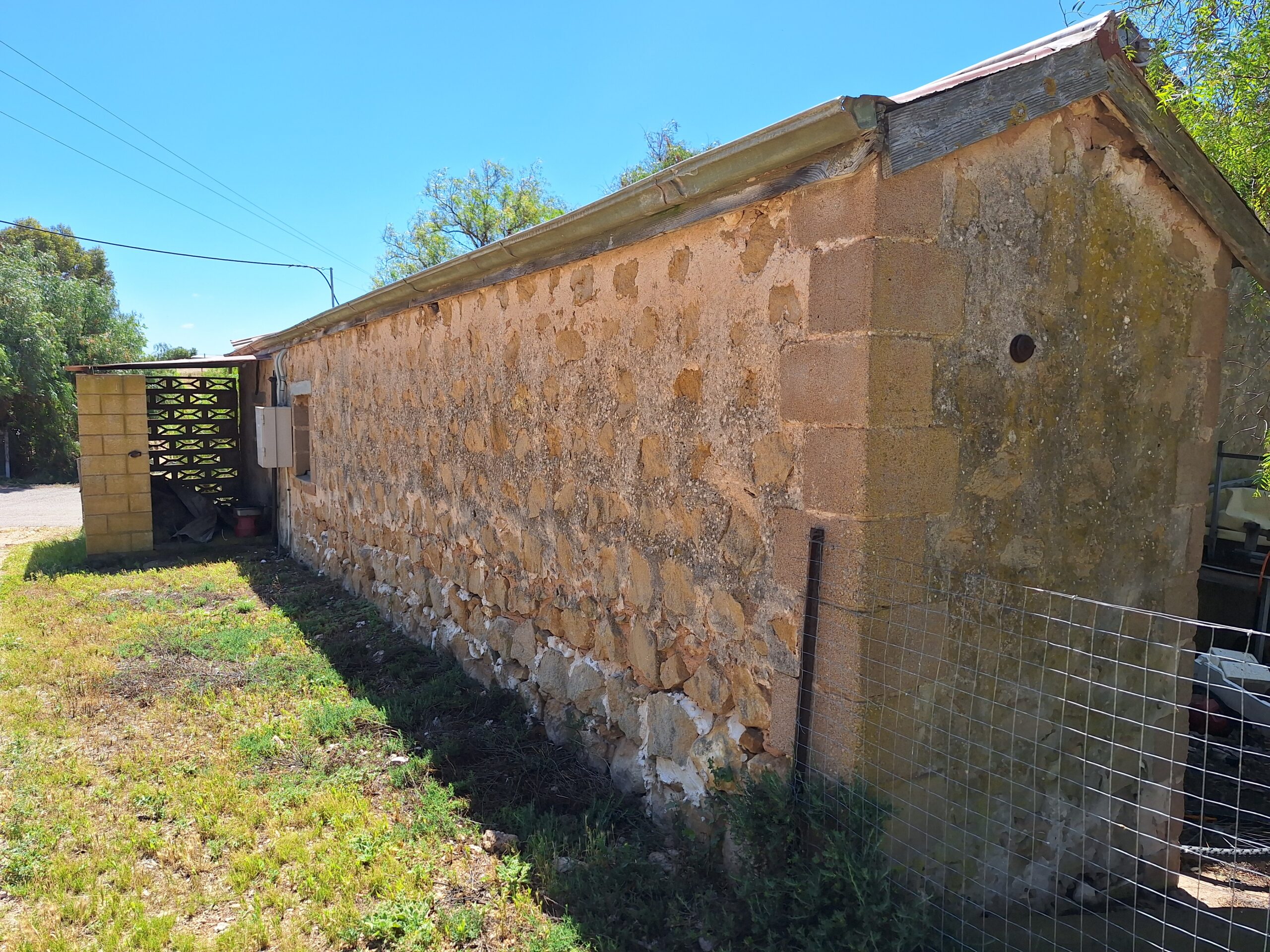
There was a steady turnover of farmers occupying the land until the latter years when one family were able to increase stock thanks to their holdings of other properties with plenty of feed. Hay was carted back to the property to feed the herd of cattle and they were grazed on sections of the reclaimed land below.
The cattle were milked in the old dairy building at the front of the property on Doyle road. Improvements to the property were made during the 1950s and 1960s including a wooden shed which housed vehicles. This shed would become eventually become The Retreat.
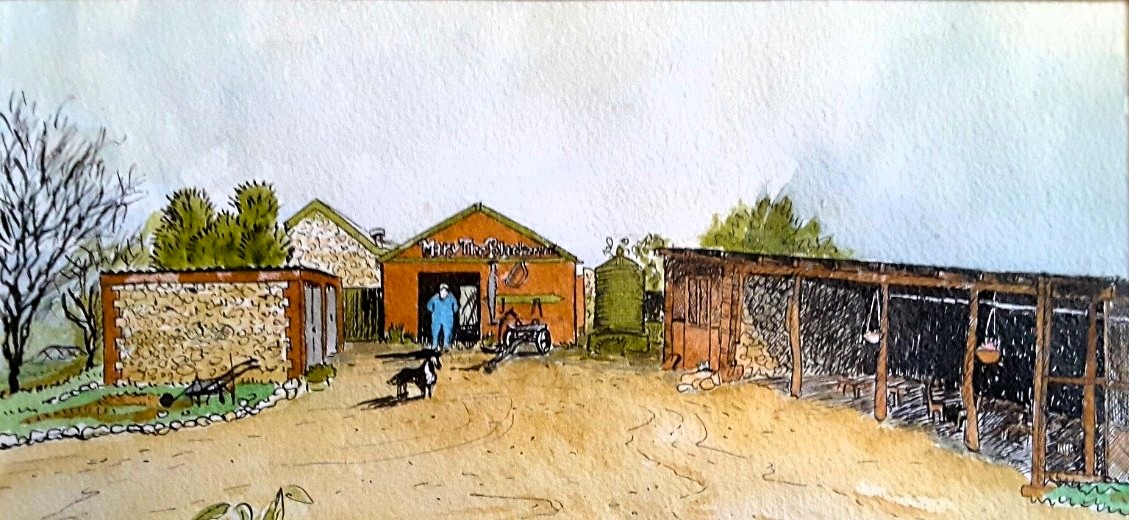
In the 1980s the property was gradually destocked and in 1987 it was purchased by Mary Arnold, more commonly known as “Mary the Blacksmith”.
Mary was decades ahead of her time. She was a trailblazing ‘lady tradie’, probably the first, and possibly the only female blacksmith operating during the period. Her forge was located in the vehicle shed and she would receive busloads of tourists in the equipment shed. She gave talks and demonstrations and was widely known and admired. The wood shed became another workshop.
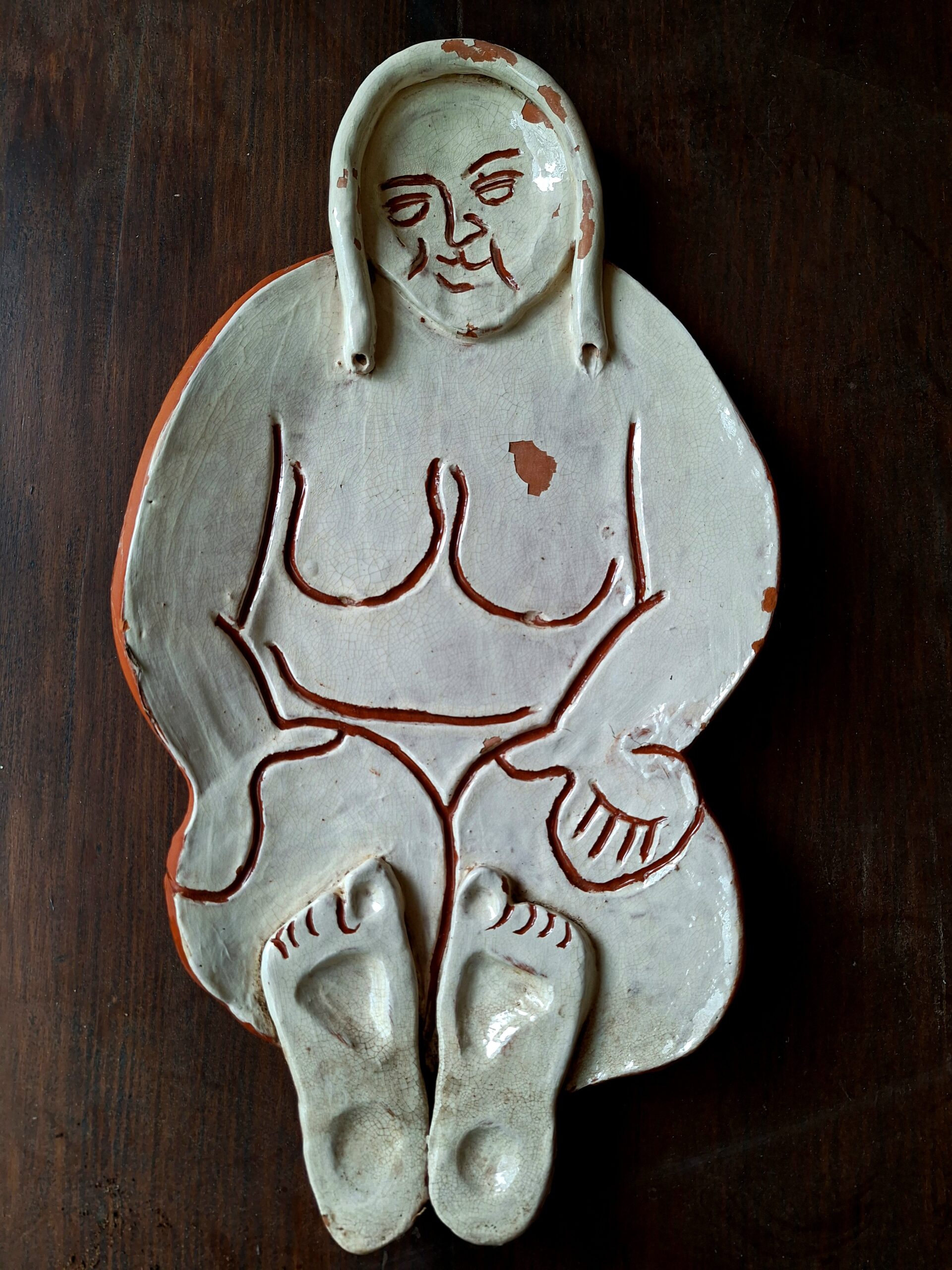
Mary sold the property in 1993 to John and Elisabeth De Koke who were prominent members of the Murray Bridge arts community. Elisabeth founded the Murray Bridge Regional Art Society and is a potter, painter and gardener. John is a photographer and painter.
Mary’s workshop became the art gallery, John enclosed part of the equipment shed which became Elisabeth’s studio, and eventually they moved the gallery to the equipment shed and created a bedroom with kitchenette in what was once Mary’s workshop. After living in Murray Bridge for 25 years, John and Elisabeth sold the property to Rob and Stef in 2015. Elisabeth has left a permanent mark on the property with a lot of her art scattered around the gardens. Their daughter, Selina, is now an established artist in Hatherleigh and has created a similar home with her husband David.
Stef and Rob welcomed their first guests at The Retreat at the end of 2016. They now have three rooms, each with their own distinctive history, for guests to enjoy.